The Cliffhangers (2020)


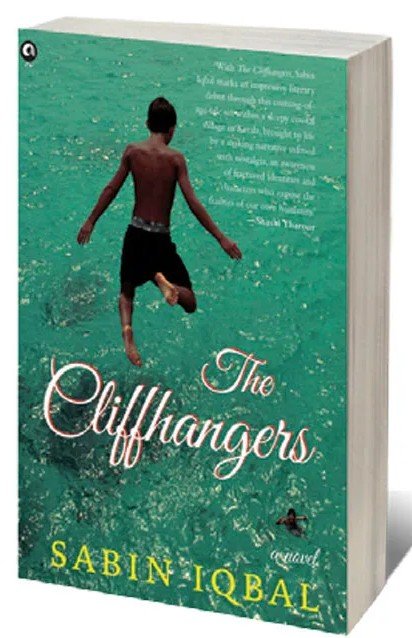
The Cliffhangers (2020) is Sabin Iqbal’s debut novel that examines communal tensions in contemporary India through a gripping coming-of-age narrative. Set in Kadaloor, a tranquil fishing village in Kerala on the southern coast, the story begins when a tourist is raped on New Year’s Eve, and the chief suspects are a group of teenaged boys known as the Cliffhangers. As they attempt to prove their innocence, the boys must also confront the growing spectre of communal intolerance that begins to divide the Hindu and Muslim fishermen and villagers. The novel skilfully weaves together the hunt for the real rapist with escalating communal tensions, propelling the village towards the edge of disaster. Iqbal’s work illuminates hard truths about the religious fault lines dividing the country, while presenting a striking narrative infused with nostalgia and an awareness of fractured identities.
PRAISES FOR THE CLIFFHANGERS
‘With The Cliffhangers, Sabin Iqbal marks an impressive literary debut through this coming-of-age tale set within a sleepy coastal village in Kerala, brought to life by a striking narrative infused with nostalgia, an awareness of fractured identities and characters who expose the frailties of our own humanity.’
—Shashi Tharoor, Congress MP
‘Sabin Iqbal writes about a terrain and its people with the kind of magic that makes you want to visit the book’s setting and strike up a conversation with its characters. The Cliffhangers is the story of struggles and redemption. And Iqbal narrates it with wisdom and grace.’
—Anees Salim
‘The Cliffhangers may never know greatness but Iqbal ensures we will always know what
they hoped to be.’
—Deepak Unnikrishnan
Sabin writes with a rare warmth and honesty, qualities I particularly admire in a writer, which reels me effortlessly into the heart of his story.
—Jahnavi Barua, Author
A poignant tale of growing up in a place that is on the cusp of cataclysmic change caused by the spread of religious jingoism, The Cliffhangers weaves together current events to create a fast-paced, coming-of-age novel about identity and the divided times we live in.
— The Hindu
The Cliffhangers is an ambitious novel about many things, while this is not necessarily a bad thing, the many themes tend to overwhelm. There is a subtle plot about the rape of a foreigner; stray incidents of local thuggery; a minor character drowns in the sea. And, yet the book is surprisingly engaging. Iqbal’s simple but descriptive writing immerses up in the cultural richness of Kerala. You may not get a great story here, but sitting at home in isolation, you will smell the salty sea, reminisce about teenage friendships. And sense the fog of hatred closing in.
— The Hindu Literary Review
Iqbal beautifully maps different aspects of Indian life: small-town India’s English-speaking aspirations, the relationship between cricket and jingoism, the human cost of the remittance model that turns the loneliness of grass widows into rage or illicit love. The book also uncovers the violent underbelly of Indian politics through its well-fleshed out characters: Muneer, the local butcher and Communist foot soldier who was in jail for killing a party member, Balannan, the HRS shakha trainer, and Vivekannan, the charismatic IAS officer who quits to join the Naxalite movement. Its prescient representation of Muslims framed under laws like the UAPA mirrors the reality of India today.
— India Today
Iqbal’s plot is easily identifiable and feels like a film—the momentum of interlaced metaphors and humour makes one all the more curious and excited. His narrator Moosa is impeccable with descriptions—mainly when he is describing flaws. Be it his family or tourists at the beach, torn religious camps, the village immigrants to the Gulf or the police…Iqbal’s book, by stepping into very sensitive topics has directed the reader to look beyond that clichéd cliffhanger shot of films we’ve grown up watching. The present is where one’s ‘name is the enemy’ but the precipice is where we could probably fight that idea. Hope, however suspended, is serious business. That’s how most cliffhangers leave us anyway: longing for more.
— Open Magazine
Zahid-e-tang-nazar ne mujhe kafir jaana/aur kafir ye samajhta hai Musalman hoon main (the narrow-minded devout considers me an infidel/ and the infidel sees me as a Muslim) reads an oft-quoted Urdu couplet. In Sabin Iqbal’s debut novel, The Cliffhangers, which speaks to our broken times rife with religious division, four friends are faced with a similar situation. Usman, Thaha, Jahangir and Moosa, four young Muslim boys while growing up in a sleepy coastal town of Varkala in Kerala–where the two dominant communities are Hindus and Muslims–decide to throw off the yoke of their religious identity and shun its restrictive practices.
— Outlook Magazine
The women in the novel intriguingly present what the reality entails for them. Be it Moosa’s indomitable yet highly vulnerable mother, or the daughters-in-law of the family who try best to linger on the hope of seeing their husbands back—Thahara, a passionate and loyal beloved, or an ambitious Amina. Although written with a partial flashback in time and age, the novel can be considered a great choice when it comes to contextualising the political and social paradox of the age.
— Financial Express
Very thinly veiled, this slim debut novel is a metaphor on the calamitous dilemma that the nation confronts in our times—do we retreat from the darkness that our democracy finds itself in? Or, do we turn back; or do we take the plunge and risk destruction? True that life is stranger than fiction, but fiction helps us in unlocking the fears that haunt us. A writer like Sabin Iqbal clears the channels of frustration, anger and distress at the way things unfold with no warning. As they say: ‘If you look into the abyss, the abyss looks back at you.’
— The New Indian Express
The Cliffhangers is a powerful story for the issues it raises. It would be fascinating to hear a freewheeling conversation between Sabin Iqbal, Tabish Khair, Amitava Kumar and Rana Ayyub on writing fiction and non-fiction in these times. Till then, and even afterwards, the novel must do the job.
— Scroll
In spite of the morbid premise of the book, Iqbal still manages to be funny. His skilful play with the language definitely evokes a laugh. It’s a fearless book, unafraid to talk of taboo topics and a dystrophic reality. The reader is left with the ominous memory of the words (reinforced daily by news reports) that SI Devan speaks to the boys: “Remember, we are living in strange times… and, your identity is your enemy!” The author thus furthers the conviction that there is an urgent need to create inclusive societies and eliminate the lack of trust and empathy.
—The Tribune
Sabin Iqbal’s first novel, The Cliffhangers (Aleph) — its textual narrative and pacing reflecting the cover-image rather appropriately. But all is not bright and bucolic, as the surface colours seemed to indicate. Set against a storyline of a tourist rape by alleged village teenagers, the novel probes into the dangerous fractures fuelled by party-driven communal politics and social instability, as it “expose[s] the frailties of our own humanity”. The book forces a pause, to reflect, both inwards and outwards, at what is transpiring before our eyes — in full public view, as innocent citizens, are held hostage to — “We actually don’t know what’s happening in Kashmir and Palestine… didn’t you hear what he said about the Muslims in Gujarat?” Faced-paced, nostalgic and wonderfully written, The Cliffhangers is an urgent and fine debut by a writer whose next work I look forward to as well.
— Sudeep Sen in The Asian Age